
Doctors, nurses, midwives, physiotherapists, pharmacists and other health professionals applying to register with the Australian Health Practitioner Regulation Agency, Ahpra, are asked to provide certified copies of their qualification certificates, identity documents and evidence of registration and employment. A notary public in England and Wales is one of the people authorised to certify those copies for use outside Australia, and health professionals on their way to Australia make up a regular part of my work.
Ahpra prescribes the wording, and it enforces it
Ahpra publishes the exact form of certification it wants, including the statement that must appear, the certifier’s name, occupation and telephone number, the date, and a stamp or seal. I certify in the form Ahpra sets out rather than with my usual annexed certificate.
This matters more than it sounds. Notaries have had bundles returned because the certification, although correct in meaning and properly given, did not use Ahpra’s current form of words. Ahpra has also changed that wording from time to time, which catches out anyone working from an old stamp. Send me the current Ahpra guidance with your documents, or tell me which application you are making, so that I work to the version you are being held to. Ahpra publishes its current requirements on its own website.
The certification goes on the document itself
Ahpra expects the certification to appear on the face of the copy, not on a separate certificate attached to it. Copies certified in the ordinary notarial way, with a certificate annexed, have been rejected on that ground alone. Where a document fills the page and leaves no room, the copy has to be produced so that the certification still fits on its face.
Where a document runs to more than one page, every page is initialled and numbered in sequence, with the certification statement on the first page.
Photographs and identity documents
Documents carrying your photograph take a different form of wording, confirming both that the copy is true and that the photograph is a true likeness of the person who presented it. That means I have to see you in person and compare your face against the photograph.
There is no remote route for this. Ahpra does not accept certification carried out over a video call, however the appointment is recorded. For a photocard driving licence I copy both sides, since a copy of one side is not a copy of the whole document.
Birth and marriage certificates
Ahpra has in recent years begun asking some applicants for birth certificates. These need care. A certificate issued by the General Register Office is already an official certified copy, and reproducing it runs into Crown copyright. The practical answer is usually to order a fresh certificate from the General Register Office rather than to copy the one you hold, and in some cases to deal with the point by declaration instead. If a birth or marriage certificate appears on your Ahpra list, raise it with me early rather than bringing it to the appointment.
Originals only
Ahpra’s certification confirms that the original document was seen and that the copy was made from it. I need the original certificates and documents at the appointment. A copy of a copy, a scan, or a certificate printed from an email cannot be certified in the form Ahpra asks for.
Verification with the awarding body
Qualification certificates are verified with the body that issued them before I release the certified copy. For UK degrees that is done through the Higher Education Degree Datacheck service. For overseas hospitals, medical schools and training bodies I contact the institution direct, using contact details taken from its own published website. The institution will not deal with me without your written authority, so you would need to sign a consent. The verification can take several days and sometimes longer, and the timing is outside my control. The certified documents cannot be released until the reply is in, so if you are working to an Ahpra deadline, allow for it when you book.
Primary source verification is a different thing
Some Ahpra pathways, particularly for medical practitioners, also require the qualification to be verified at source through a separate international service. A notarial certificate does not replace that. Before instructing anyone, check what Ahpra has actually asked you for, so that you do not pay for a certified copy where a different process is needed.
Why the cheapest route is often the most expensive
Certification can be obtained more cheaply elsewhere, and some applicants are told that a solicitor or a court counter will do it for a nominal fee. The difficulty is that Ahpra’s requirements are specific, and a certifier who does not work to them regularly may not produce what Ahpra will accept. Copies certified by people unfamiliar with the Ahpra form have been rejected, leaving the applicant to have the work done again and, in some cases, to lose an application fee. If you are going to use someone cheaper, at least give them Ahpra’s current guidance and ask them to confirm they will certify in that exact form.
Cost
Ahpra bundles usually run to several documents and each is a separate notarial act, so the fee depends on how many there are and what type. Fees run from £160 to £400 depending on the number of documents involved, with no VAT payable, and I confirm a fixed fee once I have seen what is needed. The verification charge for a UK qualification, currently around £16.80, is passed on at cost.
Before you get in touch
Email me the Ahpra list and photographs of the documents so that I can confirm the cost and the wording before you attend. Although I act independently as a notary, I am also a solicitor with the firm RWK Goodman and I use their offices for my notarial appointments. My professional practice rules require me to keep a copy of each notarised document, in most cases for 12 years but for a public form notarial act I have to keep a copy permanently, and I am also required to keep a copy of your identity documents for five years. If you would like to proceed, get in touch and we can arrange a convenient appointment.
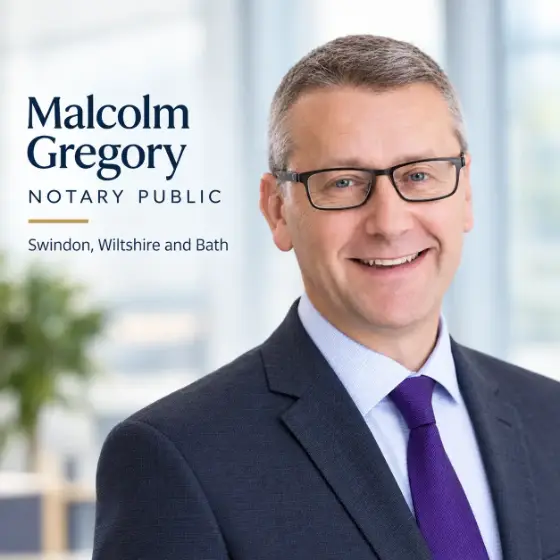
Malcolm GregoryNotary Public and Solicitor, in practice as a notary since 2006. Member of The Notaries Society, regulated through the Faculty Office. Ask Malcolm about your document
This guide is general information about notarial practice in England and Wales. It is not advice on your particular matter. The requirements of foreign governments and other receiving authorities are set by them and can change without notice, so check them with the authority before you act. I only act for you once I have confirmed your instructions and fees in writing. Fees and third-party charges were correct when written and can change.